If you aren’t sure what services you require, reach out to us. We are happy to assist.
Talk to us +44(0)1733 391377
Date: 24 June 2019
Employee engagement is a term that refers to how employees feel about the organisation they work for, which in turn affects how satisfied they are, how hard they work and how likely they are to stay in this position. A key concern of employers is how they can recruit and retain people who enjoy coming into work and are passionate about the company’s vision.
Employee engagement is essential because, above all else, it shows a distinct level of trust and commitment between the organisation and its workers. By investing in and ensuring a high level of engagement, you are creating a healthy working environment that promotes growth, collaboration and hard work between all.
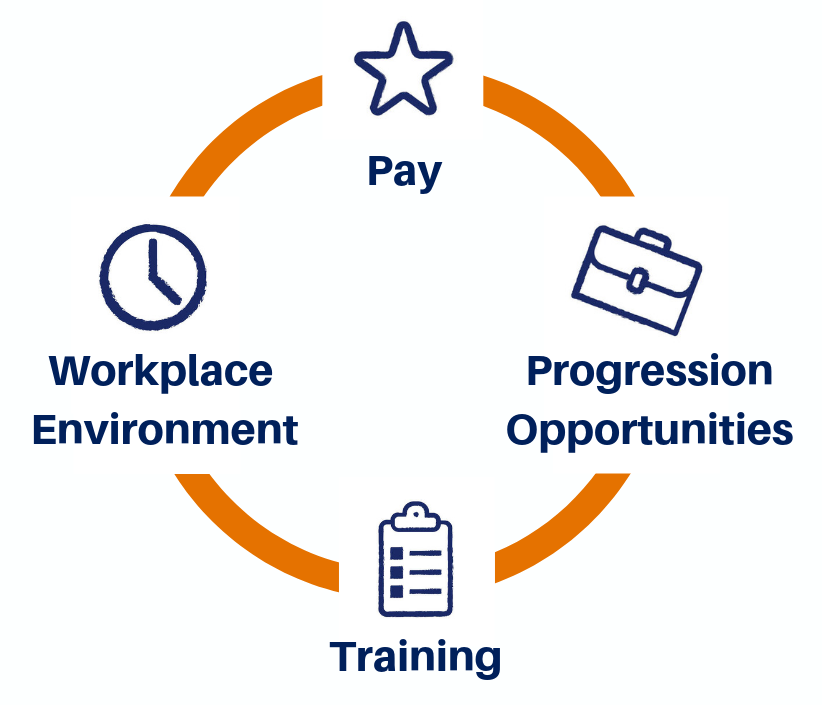
Before highlighting some of the effective employee engagement strategies you can implement, it’s important to recognise the key factors that affect employee engagement.
These are the details that have an impact on how happy your employees are, how well they’re performing and how much they enjoy coming into work.
These four primary factors are the pillars of employee engagement. If any or all of these points are neglected, then a business is likely to see a fall in their workforce’s productivity and a rise in employee turnover.
Keep these points in mind when viewing the employment engagement strategies below, as every engagement system you implement should be targeting and improving at least one of the primary factors.
Whilst surveys tend to be viewed with scepticism, they can be an incredibly efficient employee engagement strategy, highlighting issues that senior management staff may be unaware of. The success of an employee engagement survey is dependent on the questions included, so make sure you thoroughly think through how questions are worded and how open they are.
One major issue with surveys is that senior management tends to inadvertently target a specific problem, instead of opening doors for employees to comment on the company and business procedures as a whole. Employees are quick to notice this and this risks undermining the effectiveness of the exercise, which is about actively listening to your employees.
Actions definitely speak louder than words – particularly when it comes to your employees. If an issue is highlighted in a survey, or if a problem is brought up through other means, be sure to address the issue and act upon any commitments you make as a result. One of the most damaging concerns that can plague your business is if employees feel like nothing will change, regardless of whether they speak up or not. Not only does this feeling curb collaboration and prevent other issues being highlighted, but it’s also an infectious problem that soon reaches every aspect of your business, from trainees to senior management.
Surveys are a very structured method of receiving feedback from your workforce but they don’t usually happen often enough to highlight smaller problems or to tackle issues in a timely way. To address this, employers need to offer a platform where employees can feedback on a more day-to-day basis. Statements like, “feel free to speak to HR,” are often not enough to prompt most staff members to share their thoughts, which are collectively critical to a company’s culture. Consider the implementation of one-to-one meetings between managers and staff, or create a comfortable environment for employees to share what’s on their mind.
Regardless of how you achieve it, employees need to feel like they have a voice – not only to mention their concerns, but also to shape how the company is run and erase out-dated processes to ensure that the organisation remains agile in meeting its objectives. In all situations, encouraging employee and managerial collaboration can only benefit your business and it helps ensure everyone feels like they have a role to play in delivering the business’ vision.
Whilst it may seem obvious, rewarding hardworking employees and recognising those who excel is a big part of employee engagement. Your workforce like to know that if they go the extra mile for the business or push harder than their colleagues, this will be noticed and recognised. Success doesn’t even need to be rewarded on all occasions; the knowledge that their work has been appreciated and noticed is often enough of a reward for the passionate employee.
Easy to implement concepts like company-wide email newsletters, monthly catch-ups, award systems and a simple ‘Thank You’ are effective ways to achieve this.
Employees like to know how they can develop and progress their careers. Having clear and achievable steps that will take them to the next level of their career helps engage employees in this process. This is not always possible due to company size or job level constraints, but that does not mean that it is impossible. Even creating junior, regular and senior positions within the same role is a great way to give employees a target and method of improving.
Similarly, the best employees are those who seek to improve themselves, as they will become true assets to your business. Invest in your staff – they will recognise this and respect you for it.
Salary is always going to have a role to play in employee satisfaction. Employees are generally better motivated and work harder if they know they are paid fairly for the job they do. Similarly, underpaying your employees is a guaranteed way of leading to disengagement and poor staff retention. To avoid this, invest in salary benchmarking services so you can compare your own pay structure to other businesses in your sector, highlighting pay discrepancies and enabling you to adjust your salaries accordingly.
Often, depending on the size of your business, it’s difficult for senior management to remain aware of the problems on the ground. This is where line managers and intermediary managers become essential. Part of their value comes from being able to report on highlighted issues, but they can also have a direct impact on employee engagement. With an effective manager, staff are much more likely to enjoy their time at work, boosting their engagement. Therefore, training your middle managers in leadership is a brilliant engagement strategy that regularly sees results.
Employees need to feel like they are part of a good cause. If staff are unaware of the company mission or not aligned with its core beliefs, then they will feel like they are underachieving or not delivering good things through their work. Getting everyone onto the same page is a big part of improving employee engagement and takes more than just a simple company meeting. Consistently highlighting the shared goals and successes of the company must be done to keep all employees up to date.
Company values define the culture of a business and in turn, the culture has a drastic impact on overall engagement. Ensuring that your company values match your desired culture is incredibly important. Building on this, senior managers and leaders throughout the company should be an example to follow for other staff. If employees see a senior manager breaking firm-wide commitments or undermining company values in the way they work, then they too will lose respect for the values, resulting in lower engagement.
We are offering a free consultation to anyone that needs help with their employee engagement strategy
Speak to an expertUtilising these tips and ideas, you should be able to craft an effective employee engagement approach. However, if you want a more experienced and professional look at your strategy, or simply seek more information, please don’t hesitate to get in touch.
Date: 25 September 2025
Date: 16 February 2026
Date: 11 February 2026
Date: 5 February 2026
We are a leading source of UK salary data and provide the expertise, insights and tools to help HR professionals manage their pay and reward practices.
Paydata Ltd
24 Commerce Road
Lynchwood
Peterborough
Cambridgeshire
PE2 6LR
Be the first to hear about upcoming events and stay up to date with regular insights on pay and reward.
© Paydata Ltd 2026 All rights reserved | Registered in England no: 3632206 | VAT no: 728 0808 28
Site by i3MEDIA